Does Your Home Insurance Require Home Watch Visits? A Guide for Second‑Homeowners
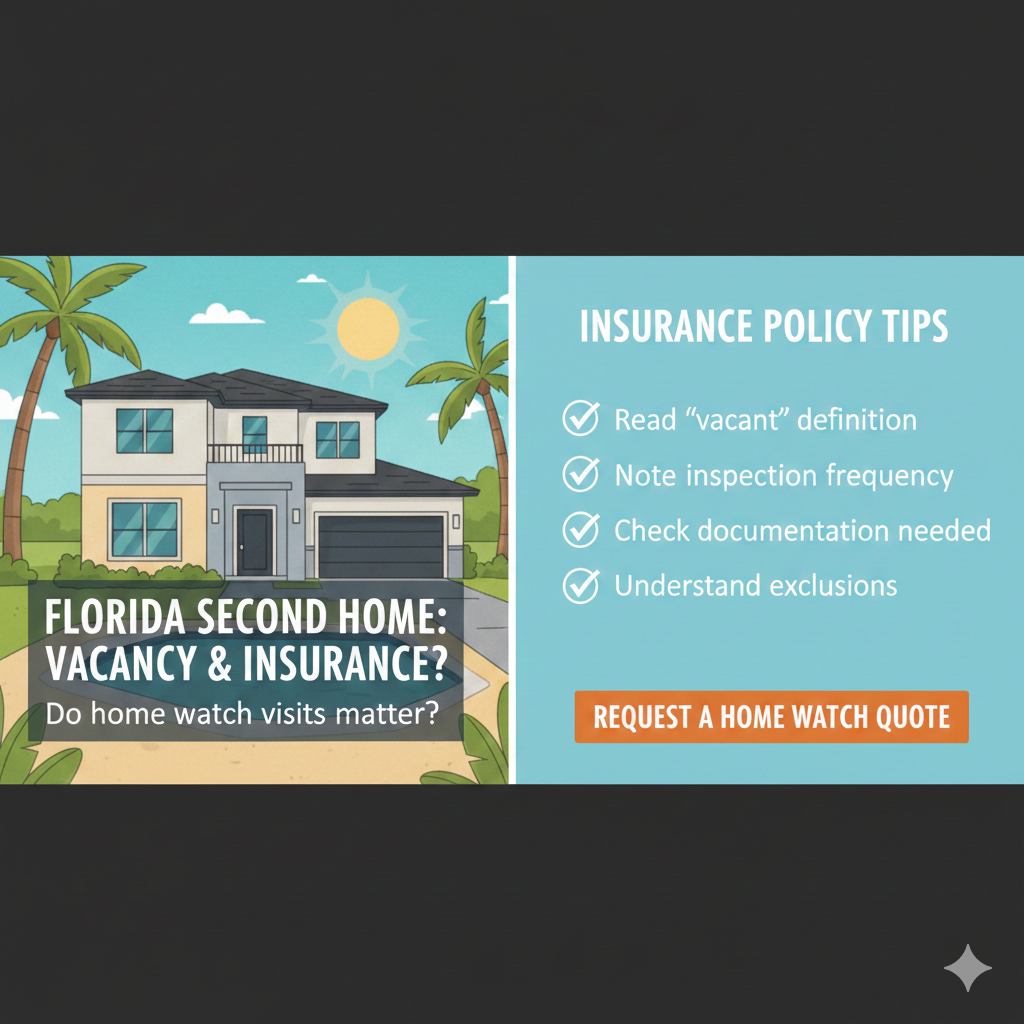
Do you own a second home in Florida and wonder if your home insurance requires home watch visits when the property is vacant?
Snippet Answer:
Many Florida home insurance policies have vacancy clauses that can affect your coverage if the home is left unmonitored. Understanding how home watch services tie into these requirements can protect both your home and your insurance claim eligibility.
What “Vacant” Means in Home Insurance Policies
Most insurer definitions consider a home vacant if no one lives in it for more than 30–60 days — even if utilities remain on. Once a home is classified as vacant, standard coverage may be reduced or excluded altogether unless specific provisions (like regular inspections) are documented.
This is why home insurance vacant home Florida clauses matter: they directly influence what’s covered if a claim arises while the home is empty.
Why Home Watch Visits Can Matter for Insurance
Insurance companies expect property owners to actively care for and protect a vacant home. Regular home watch visits provide:
✔ Documentation that someone is physically inspecting the property
✔ Early detection of issues that could otherwise become large claims
✔ Evidence of maintenance and risk mitigation
✔ Timely reporting of weather‑related or structural issues
While no policy universally “requires” home watch, many include language that expects reasonable care and inspection of vacant properties. Having a professional service check your home regularly helps demonstrate that you’re upholding those expectations.
Typical Home Watch Insurance Requirements (by Insurer)
Insurance language varies, but common themes include:
🔹 Vacancy Clauses
If no one occupies the home for a defined period (often 30–60 days), coverage restrictions may apply.
🔹 Inspection Expectations
Policies may require frequent checks (sometimes weekly or monthly) to maintain full coverage.
🔹 Documentation
Insurers may ask for evidence like reports, photos, and dated inspection records if you file a claim.
These elements are why home watch insurance requirements are not just technical jargon — they affect real outcomes after weather events, leaks, system failures, or theft.
How Frequent Inspections Help You Demonstrate Responsibility
Weekly or regular home watch visits support your insurance position by:
Showing a steady record of oversight
Catching problems before they escalate into covered losses
Providing timestamped documentation you can supply if needed
This can make the difference when a home is vacant at the time of a claim.
Insurance Policy Review Tips for Second‑Homeowners
Before leaving your Florida home vacant for a season:
✔ Read your policy’s definition of “vacant”
✔ Look for required inspection frequency
✔ Check what documentation is needed
✔ Understand exclusions and endorsements
If your policy is unclear, ask your agent how home watch reports or inspections may affect coverage. Taking initiative now can avoid surprises later.
Final Takeaway for Second‑Homeowners
Your Florida home may be vacant while you’re away — but your responsibility to protect it doesn’t go on pause. Regular, documented home watch visits help you meet insurer expectations and preserve coverage in case of damage or loss.
Need a professional home watch plan that supports your insurance requirements?
👉 Request a personalized home watch quote — contact us or call 904‑855‑7933.