Checklist: What to Do with the House After a Loved One Dies
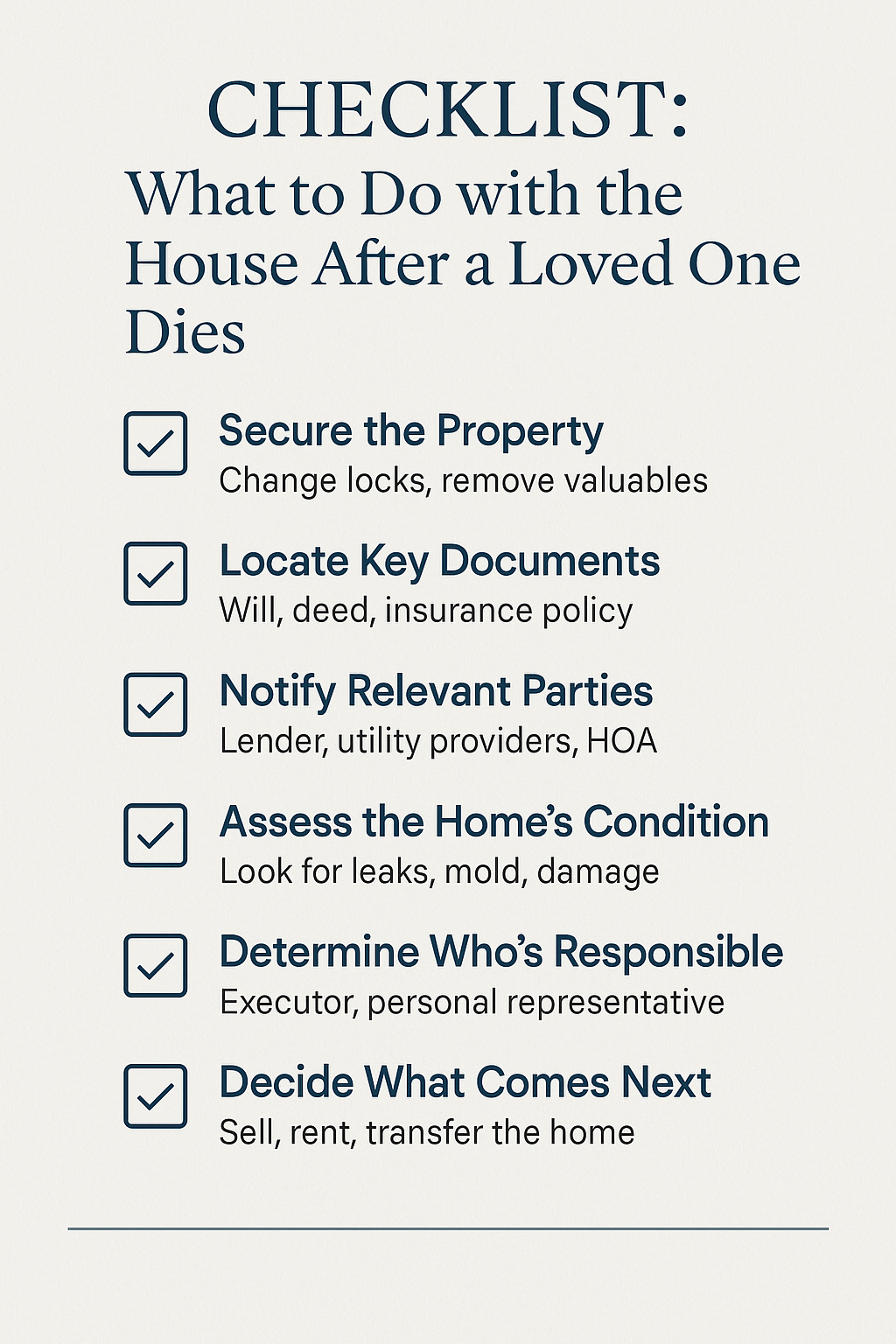
When a loved one passes, their home can feel frozen in time—filled with memories, belongings, and unanswered questions.
Whether you're the executor, a family member, or simply trying to help, knowing what to do with the home can feel overwhelming. That’s why having a clear, step-by-step plan is so helpful.
Here’s a practical checklist to guide you through the process of caring for and managing the property—while giving yourself time to grieve and make decisions.
✅ Step 1: Secure the Property
Right after someone passes, it’s important to protect the home physically and legally. Start with:
Changing the locks or securing spare keys
Checking all doors and windows
Turning on lights (interior or exterior timers help)
Forwarding mail to avoid pileups
Removing any visible valuables
If the home will be empty for a while, professional Home Watch services can help monitor these basic safety measures.
✅ Step 2: Locate Key Documents
You’ll need access to important paperwork to begin managing the estate and handling property-related tasks. Look for:
The will or trust
Deed to the home
Mortgage statements
Insurance policies (homeowners, flood, etc.)
Utility and tax records
Homeowners’ association info (if applicable)
These documents are especially important if the home goes through probate.
✅ Step 3: Notify Relevant Parties
Be sure to alert the right people or institutions about the homeowner’s passing, including:
Mortgage lender
Insurance company
Utility providers (but don’t turn them off yet!)
HOA or condo board (if applicable)
Local post office
Trusted neighbors, if you haven’t already
Keeping utilities active is important to maintain the home’s condition—especially in Florida’s climate.
✅ Step 4: Assess the Home’s Condition
Whether you’re preparing to sell, hold, or rent the property later on, it’s smart to assess the current condition early on.
You’ll want to:
Look for water leaks, mold, or damage
Check the HVAC and appliances
Test alarms and security systems
Walk the exterior for tree limbs, roof issues, or pests
If you’re not local, or can’t visit regularly, Ponte Vedra Home Watch offers detailed property reports and inspections for families managing estates across Jacksonville, Ponte Vedra Beach, St. Augustine, St. Johns, and Nocatee.
✅ Step 5: Determine Who’s Responsible
Legally, the executor or personal representative named in the will is usually in charge of managing the home. Until probate is finalized, you typically can’t sell the house—but you are expected to protect and maintain it.
That includes:
Keeping up with mortgage payments
Paying property taxes and insurance
Maintaining the yard and systems
Responding to emergencies
If you’re handling these tasks from out of town, it’s wise to have a trusted local contact or professional service in place.
✅ Step 6: Decide What Comes Next
There’s no rush to clear out the house or put it on the market—especially if emotions are high. But over time, the family should decide whether the home will be:
Sold
Rented
Transferred to a family member
Held for future use
Until that decision is made, keeping the home in good condition is key to preserving its value and avoiding costly damage.
Final Takeaway: You Don’t Have to Do It Alone
Losing someone is hard. Managing their property doesn’t have to add more stress. With the right support—and a clear plan—you can take care of the home while taking care of yourself and your family, too.
Need help overseeing a loved one’s home during a difficult time?
Contact us today or call 904-855-7933 to schedule a consultation and learn how we can help protect the home until you’re ready for next steps.